ESG reporting is now a standard expectation for real estate owners and facility managers.
Most organisations managing a building portfolio already have extensive documentation: PDF floor plans, DWG technical drawings, point clouds from past surveys, room lists in spreadsheets. The problem isn't absence of data, it's that it lives in disconnected formats, owned by different teams, with no common structure. Before any meaningful ESG reporting can happen, this data needs to be consolidated into a single, reliable source.
Minimal BIM from existing documentation
Yet one of the most common obstacles is the lack of structured, verifiable building data to support it. The good news: in most cases, that data already exists — and ioFM turns it into a single source of truth.
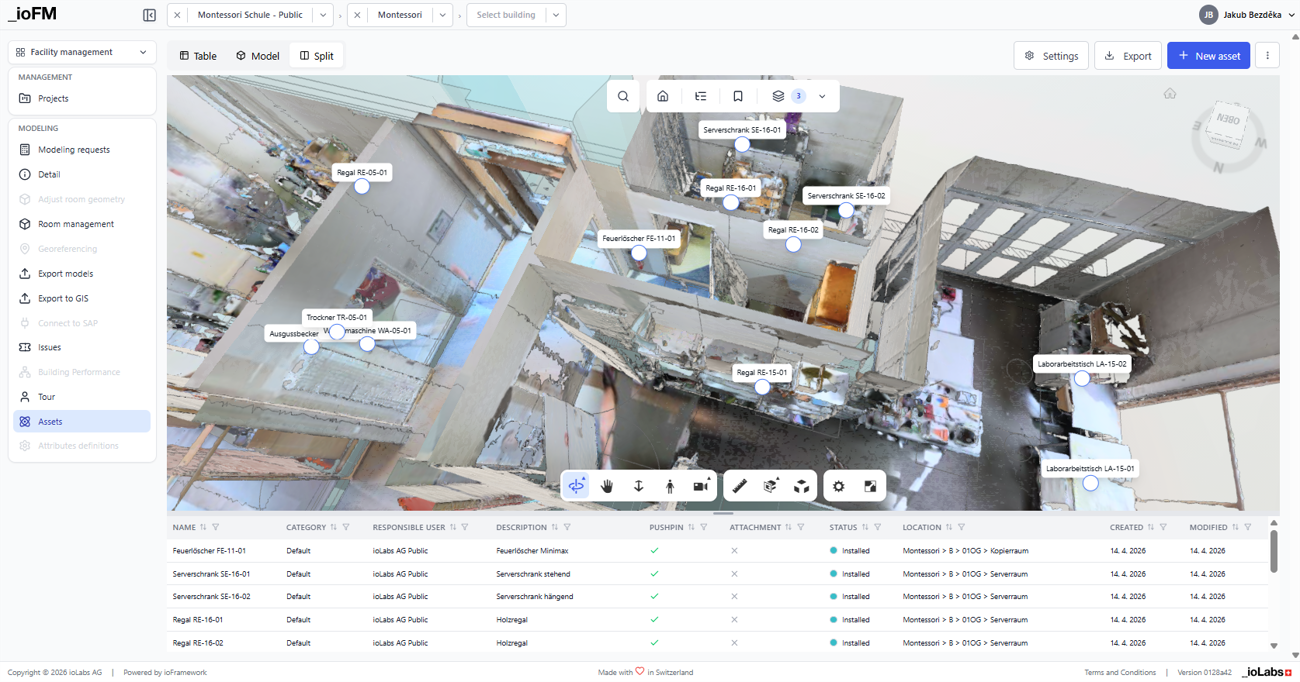
The conventional assumption is that structured building data requires a full BIM implementation, a time-consuming and costly process that many organisations defer indefinitely. ioFM takes a different approach: using the documentation you already have, ioFM generates a lightweight, room-centric 3D model — what we call a Minimal BIM. No new surveys, no full IFC modelling project required. The model is uploaded directly to the ioFM web application and becomes the operational foundation for facility management and ESG workflows. The output is practical by design: a room-centric model with structured exports, built from floor plans and 3D scans, ready to use from day one.
From spatial model to ESG reporting
Once the Minimal BIM is in place, operational data can be layered on top. ioFM supports the data categories that ESG reporting increasingly demands:
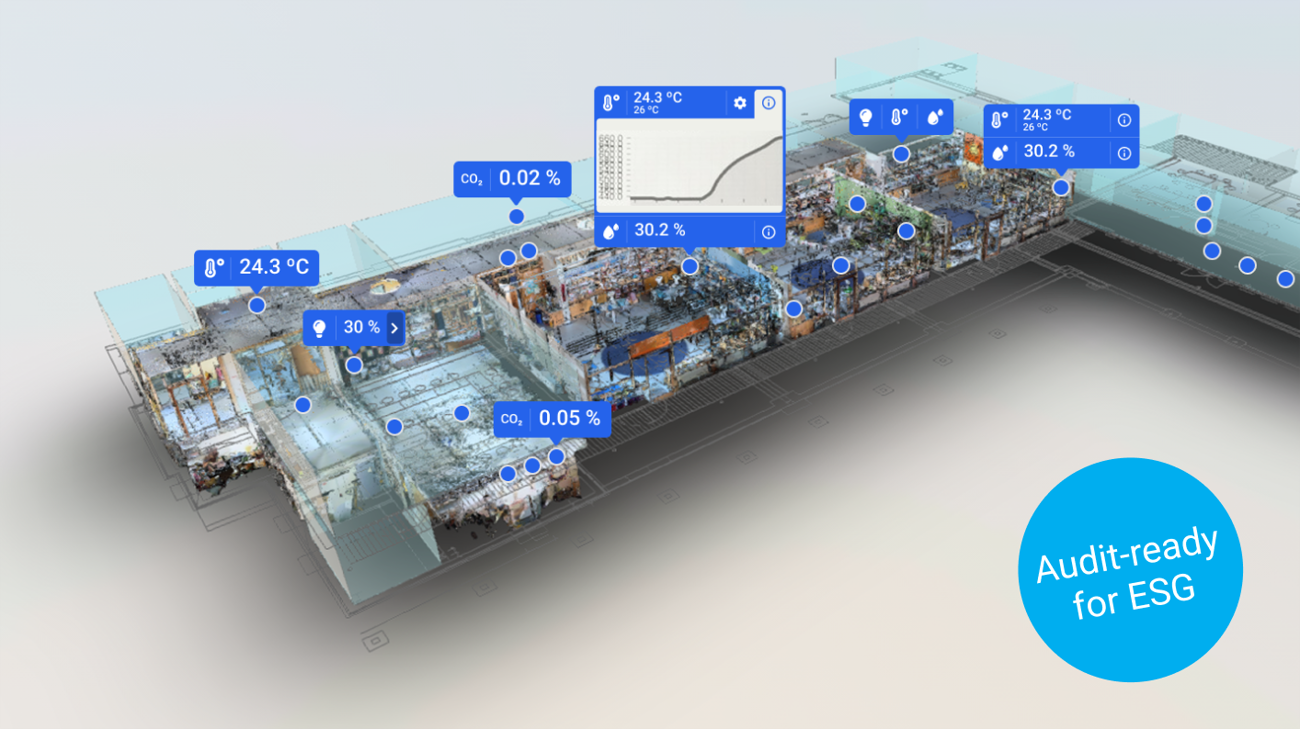
- Energy by zone — IoT sensor integration for granular energy consumption tracking
- Circularity — asset and material tracking across their lifecycle
- Governance and reporting — structured, exportable evidence for audits and compliance documentation
This turns what was previously a fragmented documentation problem into a coherent, query-ready data environment.
Audit-ready evidence for the full ESG workflow
What ioFM delivers is not just a model, it's verifiable documentation. ioFM produces structured, verifiable data that supports energy efficiency decisions based on actual consumption rather than assumptions, material tracking for circularity goals, and compliance evidence that is both exportable and traceable. For portfolio owners working toward ESG certifications or regulatory compliance, this represents a meaningful shift: from data collection to a maintained, audit-ready foundation.